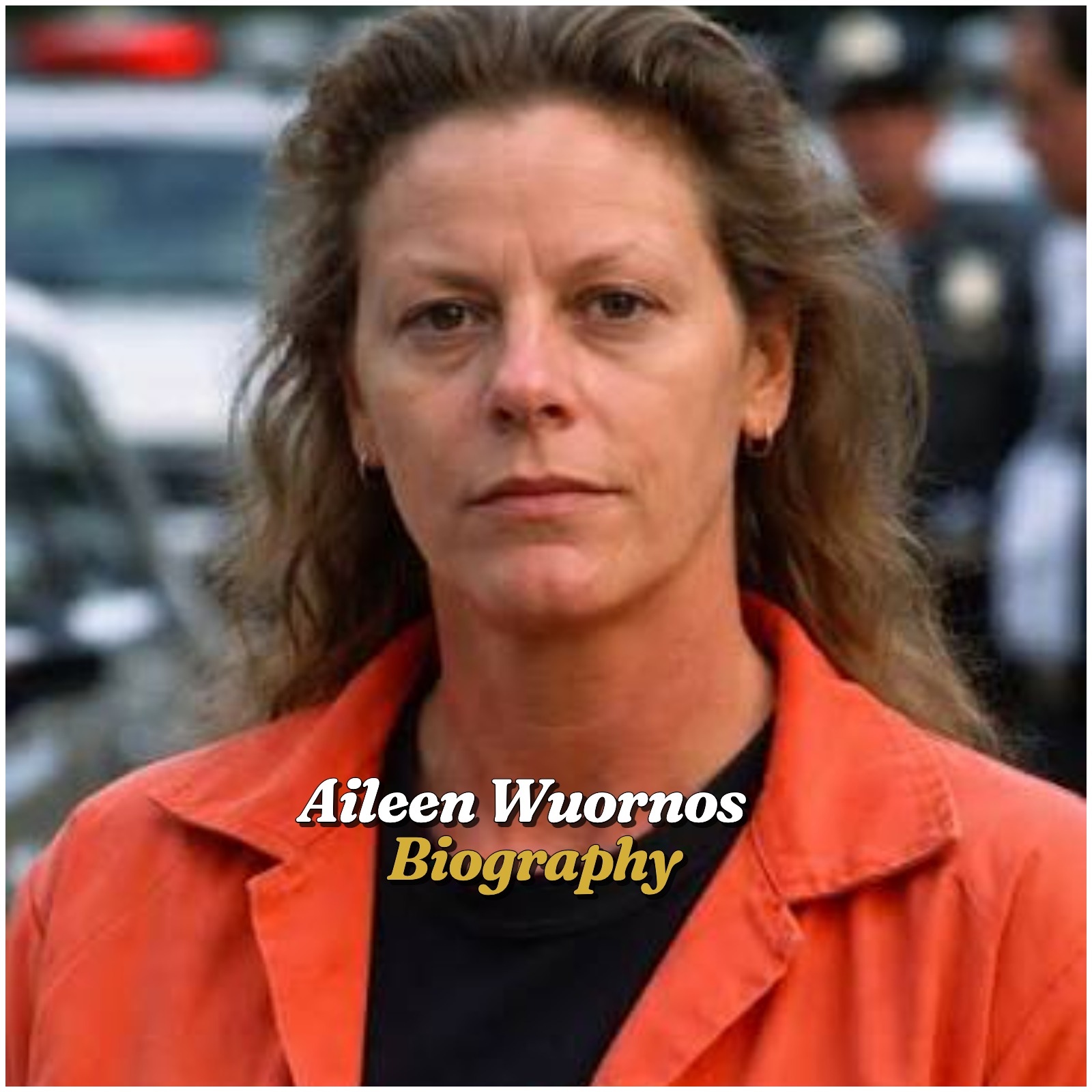
Aileen Carol Wuornos was an American convicted serial killer whose name became one of the most recognizable in the history of American true crime. Born on February 29, 1956, in Rochester, Michigan, Wuornos experienced a deeply unstable childhood before becoming involved in crime and survival sex work as a young woman. Between 1989 and 1990, she killed seven men in Florida, although she was ultimately convicted of six murders because the body of one alleged victim, Peter Siems, was never recovered.
Wuornos maintained that several of the killings occurred after men attempted to sexually assault or otherwise attack her. Her account became one of the most controversial aspects of the case because prosecutors presented a different explanation, arguing that she deliberately robbed and killed men she encountered while working along Florida highways. She initially confessed to the killings while claiming self-defense, but later changed aspects of her account and accepted responsibility for the murders.
Her case attracted extraordinary media attention because female serial killers were comparatively uncommon in the public imagination and because of the dramatic circumstances surrounding her childhood, relationships, crimes, arrest and execution. Her life was later dramatized in the 2003 film Monster, in which Charlize Theron portrayed Wuornos and won the Academy Award for Best Actress. More recently, documentaries and television productions have returned to her story, keeping Wuornos at the center of discussions about crime, abuse, gender and the true-crime industry.
Aileen Wuornos Early Life
Aileen Carol Pittman, later known as Aileen Wuornos, was born on February 29, 1956, in Rochester, Michigan. Her parents were Diane Wuornos and Leo Arthur Pittman, but her parents separated before she was born. Her mother eventually left Aileen and her older brother, Keith, and the children were legally adopted by their maternal grandparents, Lauri and Britta Wuornos. Wuornos grew up in Troy, Michigan, in a household that she later described as deeply troubled.
Wuornos’s childhood was marked by abandonment, instability and allegations of abuse. She later said that she had been physically and sexually abused, although individual details of her childhood accounts have been debated and reconstructed differently in biographies and documentaries. One particularly important revelation came when she was around 10 years old and learned that the people she believed were her parents were actually her grandparents. Her biological father, Leo Pittman, had been imprisoned for child rape and later died by suicide while in custody, adding another difficult element to her family history.
As a teenager, Wuornos became increasingly disconnected from conventional family and school life. She reportedly ran away from home several times and became involved in juvenile detention and survival sex work. At 14, she became pregnant and was sent to a home for unwed mothers. She gave birth to a son in March 1971, and the child was subsequently placed for adoption. Afterward, Wuornos left school and spent periods living in unstable conditions, including sleeping outdoors and in abandoned vehicles. Her grandmother died later that year, and her grandfather eventually refused to continue caring for her.
Aileen Wuornos Education
Aileen Wuornos’s formal education was limited. Available biographical records identify Troy High School in Troy, Michigan, as the school she attended, but she did not complete her high-school education. Her teenage years were increasingly dominated by family instability, pregnancy, juvenile detention and homelessness rather than a conventional academic path.
Her education was disrupted particularly sharply after she became pregnant at 14. Following the birth of her son in 1971 and his subsequent adoption, Wuornos did not return to a stable educational environment. She moved between different living situations and spent considerable time outside the care of a conventional family structure. These circumstances effectively ended her formal schooling while she was still very young.
There is no reliable evidence that Wuornos later attended college, university or completed a vocational qualification. Her adult life was instead characterized by transient employment, hitchhiking, survival sex work and repeated contact with the criminal justice system. Consequently, when discussing her educational background, Troy High School and her incomplete secondary education are the principal documented details rather than any university or professional qualification.
Aileen Wuornos Career
Wuornos did not have a conventional long-term career. After leaving home as a teenager, she survived through a combination of informal work, hitchhiking, petty crime and sex work. By adulthood, she was traveling around the United States and eventually settled in Florida, where she worked as a sex worker along highways. Her lifestyle was highly unstable, and she frequently moved between temporary accommodations.
Her criminal history began well before the murders for which she became famous. Wuornos had multiple encounters with law enforcement involving offenses such as theft, robbery and assault. Her arrests and unstable lifestyle continued through the 1970s and 1980s. In 1976, she briefly married Lewis Gratz Fell, a much older man, but the marriage was annulled after only a short period.
In 1986, Wuornos met Tyria Moore at a gay bar in Daytona, Florida. The two developed a relationship and eventually lived together. Moore worked at various jobs while Wuornos continued earning money through sex work. According to accounts of the relationship, financial difficulties became increasingly important, and Wuornos’s criminal activity eventually escalated dramatically.
Between November 1989 and 1990, Wuornos was responsible for the deaths of seven men in central and northern Florida. The victims were generally men whom she encountered while working along the highways. She used a firearm in the killings and subsequently took property or money from some of the victims. Wuornos later confessed to seven killings, although she was convicted of six because prosecutors did not bring a murder charge in the case involving Peter Siems, whose body was never found.
The murders transformed Wuornos from a transient criminal into a nationally known criminal defendant. She was arrested in January 1991 after investigators connected her to the killings, and Tyria Moore subsequently cooperated with authorities. Moore participated in recorded telephone conversations with Wuornos, during which Wuornos confessed. Wuornos was convicted of Richard Mallory’s murder in January 1992 and subsequently entered pleas in several other cases, receiving multiple death sentences.
Aileen Wuornos Appears in Netflix’s Monster: The Lizzie Borden Story as New Docuseries Unmasking a Monster: Aileen Wuornos Nears Premiere
Aileen Wuornos returned to major public attention in September 2026 through Netflix’s Monster: The Lizzie Borden Story, the fourth installment of Ryan Murphy and Ian Brennan’s Monster anthology. The season premiered on September 17, 2026, and features Sarah Paulson portraying Wuornos. The production uses Wuornos as a fictionalized connection to Lizzie Borden rather than portraying an actual historical relationship between the two women.
The inclusion of Wuornos in the series has generated discussion because the real Wuornos and Lizzie Borden lived in different historical periods and had no documented personal relationship. Reports about the production emphasize that scenes connecting Wuornos to Borden are fictional devices created for the series. One example is a storyline involving Wuornos visiting the Lizzie Borden house, which did not happen in real life; Wuornos was already imprisoned when the house opened to the public in 1996.
At the same time, Investigation Discovery announced Unmasking a Monster: Aileen Wuornos, a three-part docuseries scheduled to premiere on September 30, 2026, on Investigation Discovery and HBO Max. Produced by Arrow Media, the project uses digital replication and visual-effects technology to reconstruct documented accounts involving Wuornos, investigators and people connected to the case. Its announcement has added another major contemporary examination of Wuornos’s life and crimes, making her story the subject of multiple major productions decades after her execution.
Aileen Wuornos Cause of Death and Death
Aileen Wuornos was executed by lethal injection on October 9, 2002, at Florida State Prison in Raiford, Florida. She was 46 years old. The execution followed her convictions for six murders committed in Florida between 1989 and 1990. Florida Department of Corrections records identify Wuornos as one of the women executed by the state after the resumption of executions in Florida.
Wuornos spent roughly a decade on death row after her first murder conviction in 1992. During that period, she remained a subject of intense media attention, and questions surrounding her motives, childhood experiences, relationships and mental state became part of the public discussion surrounding her case. She ultimately expressed a desire to stop pursuing further legal challenges and accepted the prospect of execution.
On the day of her execution, Wuornos was administered a lethal injection. Her final statement referenced Jesus and a return associated with a “mother ship,” reflecting the religious beliefs she had expressed during her final years. Her execution ended the legal proceedings surrounding the murders but did not end public interest in her story.
Aileen Wuornos Personal Life
Wuornos’s personal life was characterized by unstable family relationships, homelessness and a series of short-lived relationships. Her first significant adult marriage was to Lewis Gratz Fell in 1976. The marriage lasted only a few months and was annulled. She later became involved with Tyria Moore, whom she met in 1986 at a gay bar in Daytona, Florida.
Wuornos and Moore’s relationship became one of the most important relationships in the story of the murder investigation. The two lived together for several years, with Wuornos largely supporting them through sex work. After the killings began, Wuornos told Moore about what had happened. Moore eventually left her and later cooperated with investigators. Under police direction, Moore participated in telephone conversations designed to obtain a confession from Wuornos, which became significant evidence in the prosecution.
Wuornos also had a child when she was 14 years old. She gave birth to a son in March 1971, but the child was placed for adoption. She did not subsequently raise the child herself. Her family relationships remained complicated throughout her life, and in 1991 she formed an unusual relationship with Arlene Pralle, a Christian woman who eventually legally adopted Wuornos while she was incarcerated.
Aileen Wuornos Age, Religion, Nationality, Height and Physical Appearance
Aileen Wuornos was born on February 29, 1956, making her 46 years old when she died on October 9, 2002. Because she was born on a leap day, her birthday occurred on February 29 only during leap years. Her birthplace was Rochester, Michigan, in the United States, and she was an American national.
Religious accounts concerning Wuornos changed over the course of her life. During her imprisonment and especially in her later years, she spoke about Christianity and God. Contemporary reporting also described her as maintaining faith in God while awaiting sentencing. A 2025 account of her prison interviews similarly discusses the religious environment in which she was raised and her later spiritual interests.
Wuornos was listed as approximately 5 feet 4 inches (1.63 metres) tall. Contemporary photographs and later portrayals show a woman with short-to-medium blonde/light-colored hair and a compact build, although her appearance changed over the years. Physical descriptions should be understood as historical descriptions rather than precise modern measurements because no comprehensive official physical profile is publicly available.
Aileen Wuornos Net Worth
There is no reliable public record establishing Aileen Wuornos’s net worth at the time of her death. Unlike entertainers, executives or professional athletes, she did not have a conventional income-producing career from which a dependable wealth estimate could be calculated. Her principal sources of income during adulthood were sex work and other irregular forms of employment, rather than a documented salary or business enterprise.
Wuornos did attract potential financial interest from the media after her arrest. Crime and Investigation reports that she sold the film rights to her life story shortly after her arrest, although Florida law restricted criminals from profiting from their criminal enterprises. Consequently, any suggestion that she accumulated substantial wealth from the sale of her story should be treated cautiously.
For that reason, a specific dollar figure for Wuornos’s net worth would be speculative. Based on the documented nature of her employment, unstable lifestyle, incarceration and lack of established assets or long-term legitimate earnings, there is insufficient evidence to support a reliable multimillion-dollar or even precise numerical net-worth estimate. A responsible biography should therefore list her net worth as unknown/not reliably documented, rather than inventing a figure.
Aileen Wuornos Legacy
Wuornos’s legacy is primarily connected to the continuing public debate surrounding her crimes and the circumstances of her life. Her case became notable not only because she was convicted of multiple murders but also because she was a woman who killed multiple men, a pattern that challenged common cultural assumptions about serial killers. Her claims that some killings followed sexual assaults also generated continuing debate over the distinction between self-defense, retaliation and murder.
Her life was dramatized in Monster, the 2003 film directed by Patty Jenkins. Charlize Theron’s performance as Wuornos brought the case to a much wider international audience and earned Theron the Academy Award for Best Actress. The film became one of the most prominent cultural portrayals of Wuornos, although it is a dramatization and should not be treated as a complete historical record of the case.
Wuornos’s story has continued to be revisited through documentaries, books, television productions and archival interviews. The 2025 Netflix documentary Aileen: Queen of the Serial Killers incorporated prison interviews and archival material, while the 2026 Monster: The Lizzie Borden Story and upcoming Unmasking a Monster: Aileen Wuornos have introduced her story to another generation. These productions demonstrate how the case continues to raise questions about violence, childhood trauma, criminal justice and the way real crimes are transformed into popular entertainment.
Frequently Asked Questions About Aileen Wuornos
Who was Aileen Wuornos?
Aileen Wuornos was an American woman who was convicted of murdering six men in Florida between 1989 and 1990. She confessed to seven killings, but one alleged victim’s body was never recovered and she was not prosecuted for that death. Wuornos claimed that the killings occurred in response to sexual assaults or attempted assaults, while prosecutors argued that she killed the men for robbery and other reasons.
How old was Aileen Wuornos when she died?
Aileen Wuornos was 46 years old when she died. She was born on February 29, 1956, and was executed on October 9, 2002.
When and where was Aileen Wuornos born?
Aileen Wuornos was born Aileen Carol Pittman on February 29, 1956, in Rochester, Michigan, United States. She later became known as Aileen Wuornos after being raised by her maternal grandparents, Lauri and Britta Wuornos.
How many people did Aileen Wuornos kill?
Wuornos confessed to killing seven men between 1989 and 1990. She was convicted of six murders. The seventh man, Peter Siems, was considered one of the victims connected to the case, but his body was never found and Wuornos was not charged with his murder.
Who was Aileen Wuornos’s girlfriend?
Aileen Wuornos’s best-known long-term partner was Tyria Moore. They met at a gay bar in Daytona, Florida, in 1986 and became romantically involved. Moore eventually cooperated with investigators after Wuornos’s arrest and participated in recorded telephone calls that contributed to Wuornos’s confession.
Did Aileen Wuornos have children?
Yes. Wuornos became pregnant when she was 14 and gave birth to a son in March 1971. The child was placed for adoption, and Wuornos did not raise him herself.
Was Aileen Wuornos married?
Yes. Wuornos married Lewis Gratz Fell in 1976. The marriage lasted only a short time and was annulled. She later had a long-term relationship with Tyria Moore.
What was Aileen Wuornos’s religion?
Accounts of Wuornos’s religious beliefs indicate that Christianity became important to her, particularly during her imprisonment. She spoke about God and faith while awaiting execution, although her religious views and spiritual experiences changed over the course of her life.
How tall was Aileen Wuornos?
Aileen Wuornos was listed as approximately 5 feet 4 inches, or 1.63 metres, tall.
What was Aileen Wuornos’s occupation?
Wuornos primarily worked as a sex worker during her adult life. She also engaged in temporary and informal work and had a history of petty criminal activity before the murders. Her lifestyle involved considerable travel and periods of homelessness or unstable housing.
When was Aileen Wuornos executed?
Aileen Wuornos was executed on October 9, 2002, in Florida. She was put to death by lethal injection at Florida State Prison in Raiford.
What was Aileen Wuornos’s cause of death?
Wuornos died as a result of a state-administered lethal injection. Her death was an execution carried out after she received multiple death sentences for murder convictions in Florida.
Who played Aileen Wuornos in Monster?
Charlize Theron portrayed Aileen Wuornos in the 2003 film Monster. Theron’s performance received the Academy Award for Best Actress and became one of the most widely recognized portrayals of Wuornos.
Is Aileen Wuornos featured in Monster: The Lizzie Borden Story?
Yes. Aileen Wuornos is featured as a character in Netflix’s 2026 Monster: The Lizzie Borden Story, with Sarah Paulson portraying her. The storyline is fictionalized and does not represent an actual historical relationship between Wuornos and Lizzie Borden.
Is there a new Aileen Wuornos documentary in 2026?
Yes. Investigation Discovery announced Unmasking a Monster: Aileen Wuornos, a three-part docuseries scheduled to premiere on September 30, 2026, on Investigation Discovery and HBO Max. The series uses digital replication and visual effects alongside documented accounts from Wuornos, investigators and people connected with the case.
What is Aileen Wuornos’s net worth?
There is no reliably documented figure for Aileen Wuornos’s net worth. She did not have a conventional professional career or a documented portfolio of substantial assets, and any precise figure commonly circulated online should be treated as unverified. Her financial circumstances were largely connected to unstable employment, sex work and later incarceration.
What is Aileen Wuornos remembered for?
Aileen Wuornos is remembered primarily for the six Florida murder convictions arising from seven killings to which she confessed, her highly publicized trials and execution, and the continuing cultural interest in her life. Her story has subsequently been adapted into films, documentaries and television productions, including Monster, Aileen: Queen of the Serial Killers and Monster: The Lizzie Borden Story.